

Put away the red pen
by Anton Zuiker on March 21, 2026
 Recently, someone sent over a draft document with a request for feedback. I printed the document, got out my red pen, and marked up the text with edits, comments, and questions. I’ve got nearly 40 years of writing and editing experience (since I was editor of the award-winning literary magazine at my high school), so my feedback was comprehensive and insightful and decisive (so I thought). The printed page had a lot of red, and when I tracked the changes to the Word file, it reflected a lot of my feedback. I sent it on its way through our internal review process.
Eventually, my version of the draft made it back to the requestor. But, they were not happy. This was not what they wanted.
What happened?
I had made three mistakes.
First, when the request for feedback came over, I didn’t respond with curiosity. What kind of feedback do you want? What level of editing, comments, and questions are you expecting? How will you use our input? When do you want this back to you?
I had forged into the forest of words armed with my red pen, but I had not asked the project leader just how this particular document should work its way through our organization before going back to the client. Who should see and touch this document first, next, last? Who decides what of our collective notes to include in the draft that gets sent back?
When we didn’t get that clarity, I allowed a colleague to send my marked-up draft, with little other input, back to the requester. I didn’t listen to my intuition that my thoughtful comments and questions, which I’d meant for our internal team to answer, would be received with less than gratitude from the client.
I had missed three chances to seek clarity.
A shift in focus
I’ve spent a couple of months reflecting on those mistakes and adjusting, mainly by recognizing and now controlling this deeply tuned habit to edit with granularity.
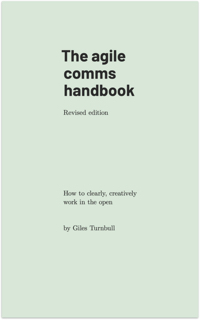
And, I’ve been rereading The agile comms handbook by Giles Turnbull. It’s an excellent how-to manual for organizational communications. On page 176, for example, Giles gives this advice:
Feedback—especially feedback on first drafts—should mostly be about the big stuff: ideas and structure.
And over in this blog post he condenses the process of writing and editing to one word: clarity. That’s what I’d learned, again, through the incident above, and it’s a goal I’ve set for myself this year, at work and in life. I’ve been learning to do this, through conversations with my career coach and with my therapist, and in reading books like The agile comms handbook or listening to podcasts such as Coaching for Leaders.
What’s become clear to me is that, on this path from writer to editor to manager to leader, it is time for me to put down my red pen. But old habits die hard: I did order the Studio Neat Limited Edition 018 red pen). So, just as I decided five years ago to “get out of PowerPoint” and spend more time helping others clarify their message instead of refining the spacing of their bullets, my role now is to focus on ‘the big stuff’.
How will this be used? Who will use it? What do you want to happen? What’s the goal? What’s the simplest way you can say this?
You can help me, and maybe yourself, next time you see me. Ask me, how have you reached for clarity recently?
Go open
Why am I writing this blog post? It’s what I’ve done for 25 years, being open about what I’m trying and where I’m failing and what I’m learning when I stumble, or when I do succeed. It’s what Giles calls ‘doing open’ (start here). I highly recommend the approach.
Next post: Round the point | Previous post: Test article | Go to HOME